

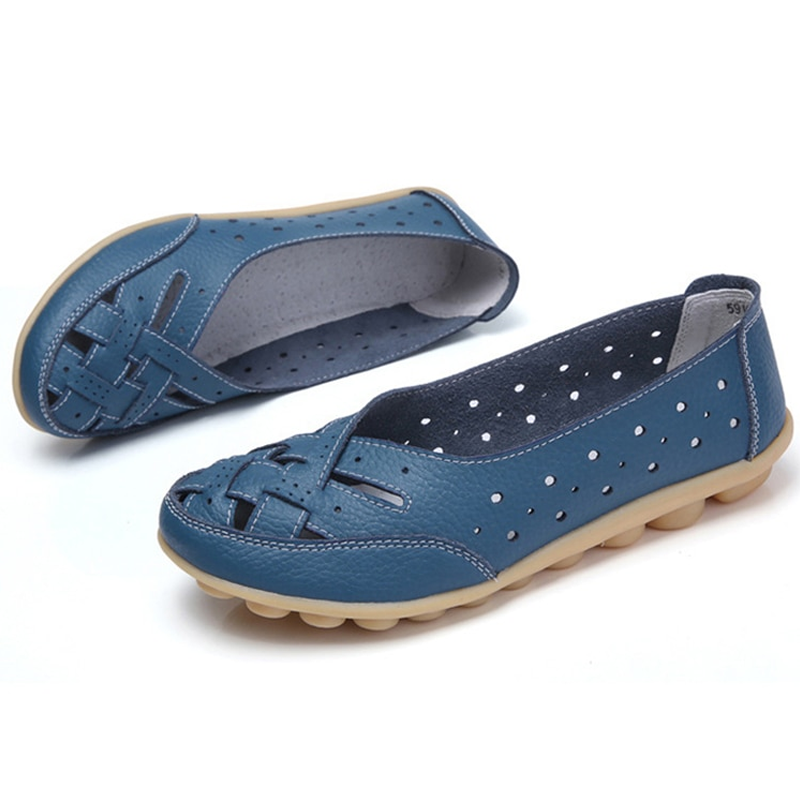
A useful doorway shoe station gives each regularly worn pair an obvious place without blocking the entrance. Start with the shoes that arrive and leave most often, keep the walking route clear and move occasional footwear somewhere else. The best arrangement is one the household will actually use.
You do not need to begin with new furniture. Watch what happens at the door for a few days, then solve the specific problem: shoes scattered across the floor, pairs separated or nowhere to sit while changing.
Count the everyday pairs
Ask each person which footwear they use in a normal week. Set those pairs apart from seasonal boots, special-occasion shoes and anything that belongs elsewhere.
Do not size the doorway around the entire shoe collection if the space cannot comfortably hold it. A small rotation near the entrance can be easier to manage than a large rack that turns every arrival into an obstacle course.
If Comfy Slipony Moccasins are part of your routine, give them a clear place as a complete pair. The same principle applies to Women Casual Breathable Hollow Slip-On Flat Loafers or other shoes you regularly wear. Product type alone does not tell you whether you will reach for them every day.
Map the movement through the door
Open the door fully and check where people step, turn and put down bags. Keep the exit and normal walking route clear. A storage solution that looks tidy with the door closed may not work when several people arrive together.
If a seat is useful, choose an appropriate stable option that fits the space rather than balancing on a shoe rack not designed for sitting. Think about how the arrangement works for everyone who uses the entrance.
Leave enough room to find and put on a pair without removing several others first. That is often more important than displaying every shoe neatly.
Separate ready-to-wear from needs-attention
Give muddy, wet or damaged footwear a temporary place appropriate to its care instructions. Do not return damp shoes to long-term closed storage or place them on top of clean pairs.
Keep the temporary area small and purposeful. It should prompt cleaning, drying or repair—not become a second permanent pile. Follow each shoe's material and care guidance rather than applying one method to everything by the door.
If a pair no longer fits or is no longer used, remove it from the active rotation. Leaving it in the easiest-to-reach place makes the arrangement less useful.
Make the household rule simple
Choose a clear convention, such as one shelf per person or complete pairs facing the same way. Show children or visitors where shoes go rather than expecting them to infer a system.
Review the station briefly once a week. Return stray pairs, deal with the needs-attention area and swap the rotation when the weather or routine changes.
If the same pair keeps landing outside the storage, ask why. The assigned spot may be too awkward to reach or too small for the shoe. Change the arrangement before blaming the person using it.
A good shoe station makes leaving and returning home easier. Keep the active collection small, preserve clear access and let the layout reflect real habits rather than a staged photograph.
Related guide: Moccasins vs. Loafers vs. Slip-Ons: Fit and Use Guide for 2026.