

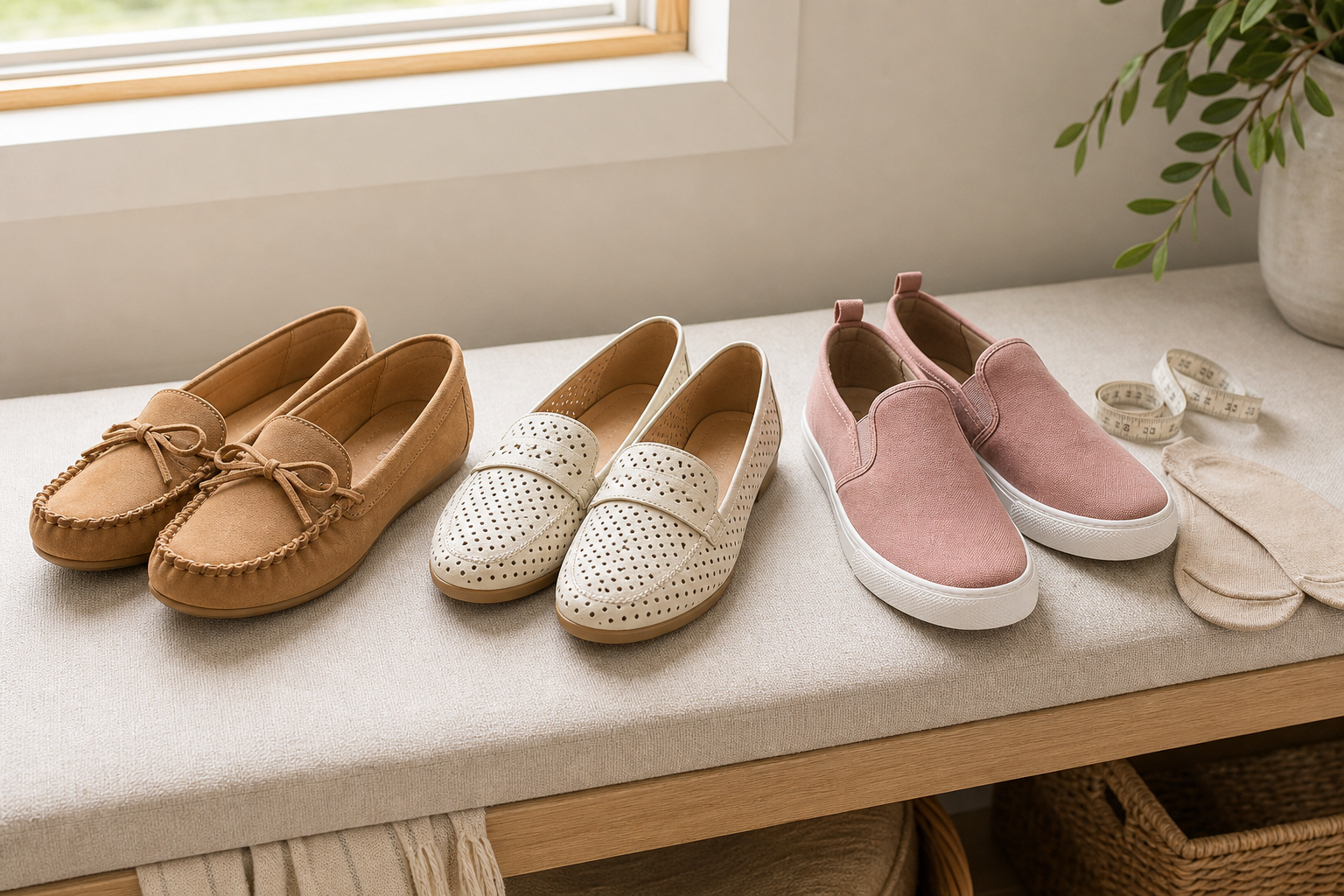
The short answer: choose a moccasin when you like a soft, flexible casual shape; choose a loafer when you want a more structured slip-on profile; and choose a slip-on sneaker when you prefer a sneaker-like sole and an easy, lace-free upper. The category name alone cannot tell you which pair will fit best. Compare heel hold, toe room, instep pressure, sole flexibility and the surfaces where you expect to wear the shoe.
Comfy Moccasin currently carries all three directions: Comfy Slipony Moccasins, Women Casual Breathable Hollow Slip On Flat Loafers, and Comfy Flat Slip On Sneakers. Product availability, sizing, materials and colours can change, so use each live listing as the final reference before ordering.
Moccasin, loafer or slip-on sneaker at a glance
| Choice | Typical construction | Useful for | Main fit check |
|---|---|---|---|
| Moccasin | Soft-looking upper with visible apron-style stitching | Relaxed outfits and light everyday use | Heel stays seated without the forefoot feeling cramped |
| Flat loafer | More defined vamp; this catalog option has a perforated upper | Smart-casual outfits and warm-weather styling | Instep feels secure without sharp pressure |
| Slip-on sneaker | Sneaker-like outsole with a lace-free upper | Errands, commuting and casual outfits | Heel hold and flex point match your stride |
| Mesh walking flat | Light mesh upper and flat profile | Everyday walking when its listed features suit the route | Toe room, seams and outsole condition |
Start with the job the shoe needs to do
A downtown Toronto commute, a quick indoor errand and a relaxed patio visit place different demands on footwear. Begin with distance, walking surface, weather and how long you will be on your feet. A soft moccasin may suit a low-key indoor or dry-day outfit, while a sneaker-style slip-on may feel more familiar for a longer casual route. This is a use-case comparison, not a guarantee of comfort, support or slip resistance.
For wet pavement, workplace hazards or uneven trails, assess footwear made and certified for those conditions. The Canadian Centre for Occupational Health and Safety notes that footwear selection should account for walking surfaces and environmental conditions. A casual product name such as “anti-slip” or “walking” does not replace checking the actual outsole, current product specifications and the route ahead.
How should slip-on shoes fit?
A good starting fit is comfortably secure at the heel, roomy enough for the toes to move, and free from concentrated pressure across the instep. Measure both feet and fit the larger one. Try footwear later in the day when possible, with the socks or no-show liners you expect to use. Sizes can vary by style, so compare your measurement with the current chart for that exact product.
- Check length: your toes should not press into the front while standing or walking downhill.
- Check width: the upper should not squeeze the widest part of the forefoot or create painful rubbing.
- Check heel hold: a little movement may occur in some slip-ons, but repeated lifting that disrupts your stride means reassessing the size or style.
- Check the flex point: the shoe should bend where your forefoot naturally bends, rather than folding through the middle.
- Walk on a clean indoor surface: test turns, a short stride and sitting-to-standing while following the return policy.
Do not depend on a tight shoe “breaking in.” CCOHS advises buyers not to expect footwear that is too tight to stretch with wear. Stop using footwear that causes pain, numbness, broken skin or persistent irritation, and seek advice from a qualified health professional when appropriate.
When a moccasin makes sense
Moccasins are recognizable by their relaxed shape and stitched upper construction. The Comfy Slipony Moccasins are the store’s clearest example. Their casual appearance works with denim, light trousers and simple travel outfits. Before choosing them, inspect the live material description, outsole photos and size chart rather than assuming every moccasin is made or cushioned the same way.
Pay particular attention to the forefoot seam and heel. An apron seam should not press against a sensitive area, and the back should stay comfortably in place. A flexible-looking shoe is not automatically suitable for long distances, wet surfaces or foot conditions. Increase wear time gradually and judge the pair on the activity you actually plan.
When a flat loafer makes sense
A loafer offers a cleaner, more structured profile that can bridge casual and polished outfits. The perforated flat loafers have openwork details that may appeal for warm-weather styling. “Breathable” is a product descriptor, not a measurable promise for every wearer or climate; confirm the upper and lining information shown on the current page.
Because a loafer has no laces, the vamp and heel shape do most of the work of keeping it on the foot. Check for comfortable contact across the instep, no pinching at the sides, and stable heel placement. If the heel slips excessively, adding a thicker sock may change the look and fit but will not correct a fundamentally mismatched last.
When a slip-on sneaker or mesh flat makes sense
The Comfy Flat Slip On Sneakers pair a lace-free upper with a sneaker-style sole, a practical direction for casual errands and everyday outfits. The Breathable Walking Mesh Flat Shoes offer another lightweight-looking catalog option. Compare their live sole, upper, lining and sizing details instead of assuming the names establish performance.
For a longer walk, look beyond cushioning at first touch. Check that the heel remains stable, the sole bends in the right place, and the tread suits dry or wet surfaces you may meet. Examine outsoles regularly: worn or contaminated tread can change traction. No casual shoe can prevent every slip, and surface conditions still matter.
A simple home fit audit
- Minute one: stand evenly and note toe contact, side pressure and whether one foot feels different.
- Minute two: walk, turn and rise onto the forefoot on a clean indoor floor.
- Minute three: wear the trousers or skirt intended for the outfit and check sock compatibility.
- Minute four: inspect seams, lining and outsole finish for anything that could rub or catch.
- Minute five: review the store’s current return conditions before wearing the pair outdoors.
Frequently asked questions
Are moccasins and loafers the same?
No. The terms overlap in casual retail language, but moccasins commonly emphasize a softer construction and visible apron stitching, while loafers usually have a more structured slip-on shape. Judge the actual product rather than the label alone.
Should slip-on shoes feel tight at first?
They should feel secure, not painfully tight. Do not rely on a too-tight pair stretching enough to become suitable. Recheck width, instep volume and the larger foot.
Can I wear casual slip-ons in the rain?
Only if the listed material and outsole are suitable for the conditions. Water can affect some uppers, and wet surfaces can reduce traction. A product title alone does not establish waterproofing or certified slip resistance.
Which style is best for travel?
Choose based on the itinerary: easy on-and-off, packability, expected walking distance, weather and surface. Test the exact pair before the trip rather than introducing unworn footwear on a long travel day.
How do I clean moccasins or loafers?
Follow the product and care-label instructions for the exact material. Remove loose debris gently and spot-test any cleaner in a hidden area. Do not assume leather, synthetic, textile and mesh uppers use the same method.
Bottom line
Pick the silhouette after you define the use. Moccasins favour a relaxed, soft-looking style; loafers create a cleaner smart-casual line; slip-on sneakers offer a sneaker-inspired option without laces. Then verify the real pair: measure both feet, check toe and instep room, walk indoors, inspect the outsole, and compare the current product details. Fit and route matter more than the category name.